
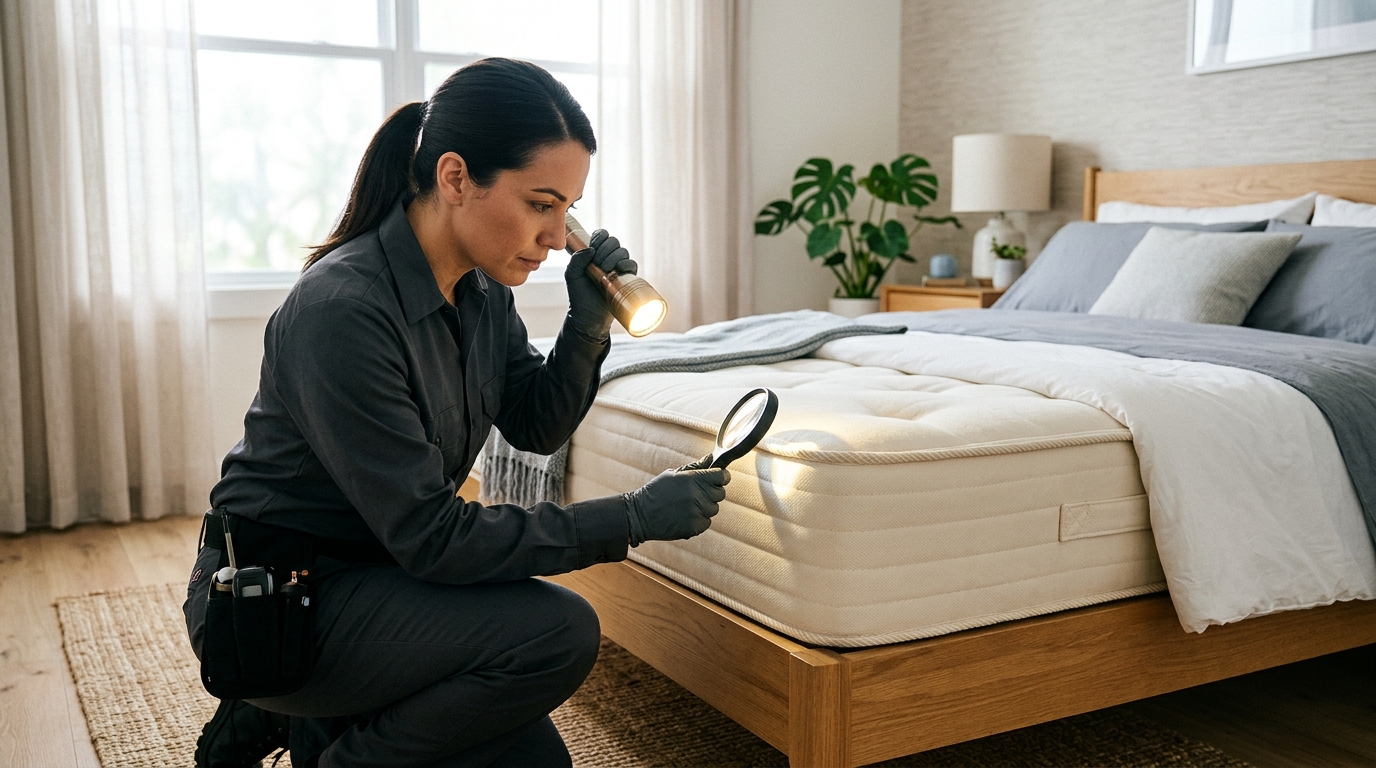
A professional bed bug inspection NJ is the first step toward eliminating an infestation. At Promax Bed Bug Experts, our licensed inspectors conduct thorough examinations of residential and commercial properties throughout Passaic County and northern New Jersey. We’ve performed thousands of inspections over 11 years, and we know exactly where bed bugs hide.
We provide free estimates following every inspection. Our transparent process means you’ll understand the scope of your infestation and your treatment options before making any decisions. Call 1-877-323-3284 to schedule your inspection today.
Our Comprehensive Bed Bug Detection Process
Bed bug detection requires methodical examination of every potential hiding spot. Our inspectors follow a systematic protocol that covers all high-risk areas in your property.
We focus on zones where bed bugs congregate near their food source—you. These insects travel 5-20 feet from hiding spots to feed, typically at night. Understanding their behavior patterns guides our inspection strategy.
Primary Inspection Zones
- Mattress seams and tufts: The most common hiding spots. We examine every seam, fold, and button carefully.
- Box springs: Bed bugs hide inside fabric tears and along wooden frames. We inspect the entire underside.
- Headboards and bed frames: Cracks, screw holes, and joints provide perfect harborage. We check behind and inside hollow posts.
- Nightstands and furniture: Drawers, undersides, and backs of items within 15 feet of sleeping areas.
- Baseboards and molding: Gaps between baseboards and walls are frequent hiding spots.
- Electrical outlets and switch plates: Bed bugs squeeze into wall voids through outlet openings.
- Upholstered furniture: Sofas, chairs, and recliners receive the same detailed examination as beds.
- Carpets and flooring: Edge tack strips, under area rugs, and carpet-wall junctions.
- Wall hangings and décor: Behind picture frames, mirrors, posters, and wall-mounted items.
- Closets and storage: Clothing piles, shoe storage, and boxes near sleeping areas.
Evidence We Look For
Our professional bed bug inspection identifies multiple types of evidence. Finding one type of sign doesn’t confirm infestation—we look for patterns.
Live bed bugs: Adult bed bugs are reddish-brown, flat, oval, and about 5-7mm long (apple seed size). Nymphs are smaller, translucent to light brown. Finding live bugs confirms active infestation.
Cast skins (exuviae): Bed bugs molt five times before reaching adulthood. These shed skins are hollow, translucent shells that accumulate in hiding spots. Multiple cast skins indicate an established population.
Fecal spots: Dark spots or smears on fabric, mattresses, or walls are digested blood. Fresh spots may smear when touched with a damp cloth. Heavy spotting indicates significant activity.
Eggs and egg casings: Tiny (1mm), white, oval eggs are laid in clusters. Each female produces 200-500 eggs over her lifetime. Finding eggs confirms reproduction.
Blood stains: Small reddish-brown stains on sheets may result from crushed bugs or feeding sites. These alone don’t confirm bed bugs—other insects can cause similar marks.
Inspection Timeline and What to Expect
A typical bed bug inspection takes 45-90 minutes for an average apartment or single-family home. Larger properties or heavily cluttered spaces require more time. We never rush—thoroughness matters more than speed.
Before the Inspector Arrives
Minimal preparation helps. We ask that you:
- Strip beds down to the mattress (we’ll provide instructions when you schedule)
- Remove items from under beds if possible
- Ensure access to all rooms, including closets
- Contain pets in a separate area during inspection
You don’t need to bag belongings or move furniture. Excessive cleaning can actually disperse bed bugs to new areas, making detection harder.
During the Inspection
Our bed bug inspector will introduce themselves and explain the process. We typically start in bedrooms and work outward to living areas. You’re welcome to observe and ask questions.
We use flashlights and inspection mirrors to examine tight spaces. For suspected wall voids or structural hiding spots, we may recommend further investigation. We document findings with photos when infestation is confirmed.
If we find evidence, we’ll show you what we’ve discovered. Understanding the signs helps you recognize potential reinfestation in the future.
After the Inspection
Following our examination, we’ll sit down with you to discuss findings. If bed bugs are present, we explain the infestation level and recommend treatment options. If no evidence is found, we’ll discuss whether monitoring is appropriate or if we’re confident in giving the all-clear.
Every inspection includes a free written estimate if treatment is needed. The estimate details our recommended approach, timeline, preparation requirements, and transparent pricing. There’s never pressure to commit immediately—take time to review your options.
Understanding Infestation Levels
Not all bed bug problems are equal. Professional bed bug detection includes assessing infestation severity, which determines treatment approach and expected timeline.
| Infestation Level | Characteristics | Typical Treatment |
|---|---|---|
| Light | Few live bugs, minimal fecal spotting, isolated to one or two areas, recent introduction (likely under 2 months) | 1-2 treatment visits, focused application, follow-up inspection in 2-3 weeks |
| Moderate | Multiple bugs in several areas, noticeable cast skins, fecal spotting in harborage areas, likely 2-4 months established | 2-3 treatment visits, comprehensive coverage, follow-ups at 2 and 4 weeks |
| Heavy | Numerous bugs visible during day, widespread harborage, heavy fecal staining, eggs in multiple locations, established 4+ months | 3+ treatment visits, whole-unit treatment, possible adjacent-unit inspection, follow-ups at 2, 4, and 6+ weeks |
We provide honest assessments. If you have a light infestation caught early, we’ll tell you. If the problem is extensive, we’ll explain what’s required to achieve complete elimination. Contact us at 1-877-323-3284 for a professional evaluation.
Treatment Recommendations vs. Monitoring
Not every suspected bed bug situation requires immediate treatment. Our approach depends on what we find during inspection.
When We Recommend Immediate Treatment
If inspection confirms live bed bugs, eggs, or recent signs of activity, treatment should begin promptly. Bed bugs reproduce quickly—a small problem becomes moderate within weeks.
We recommend treatment when we find:
- Live bed bugs at any life stage
- Fresh eggs or recently hatched nymphs
- Fresh fecal spotting or blood stains with other confirming evidence
- Multiple types of evidence in the same area
- Reports of bites combined with physical evidence
When Monitoring May Be Appropriate
If inspection finds no evidence but you have concerns, monitoring provides peace of mind without unnecessary treatment. We might recommend monitoring when:
- You’ve had confirmed bed bugs in an adjacent unit but we find no evidence in yours
- You experienced bites while traveling but our inspection shows no signs at home
- Previous treatment was successful and you want confirmation before closing the case
- You found a single bug but our thorough inspection reveals no supporting evidence
Monitoring typically involves returning for follow-up inspections at 2-4 week intervals. If bed bugs appear, we catch them before populations grow.
Why Professional Inspection Matters
DIY bed bug detection misses the majority of infestations. Bed bugs hide in cracks as thin as a credit card. Their eggs are nearly invisible to the untrained eye. By the time people spot bed bugs crawling in daylight, infestations are often heavy.
Our inspectors know the difference between bed bugs and similar insects (bat bugs, carpet beetles, book lice). We understand bed bug behavior—where they travel, how they colonize new spaces, and which signs indicate active versus old infestations.
Professional inspection saves money. Finding bed bugs early means simpler, less expensive treatment. Confirming you don’t have bed bugs prevents wasted money on unnecessary pesticide applications.
Service Area: Passaic County and Beyond
Promax Bed Bug Experts provides professional bed bug inspection throughout Passaic County, with expanding service into Bergen, Essex, and Morris counties. We’ve inspected properties in Paterson, Clifton, Passaic, Wayne, Totowa, Little Falls, and surrounding communities.
We offer 24/7 emergency response for severe situations. Most inspections can be scheduled within 24-48 hours of your call. Reach our team at [email protected] or call 1-877-323-3284 anytime.
What Happens If Bed Bugs Are Confirmed
If our inspection confirms bed bugs, we move quickly to develop your treatment plan. We use residual liquid insecticides, insect growth regulators (IGRs), and contact aerosol treatments applied by licensed technicians. Our targeted treatment approach has proven effective over 11 years and thousands of successful eliminations.
We’ll provide detailed preparation instructions before your first treatment. Preparation is critical—it ensures our products reach hiding spots and protects your belongings. Treatment typically requires 2-3 visits spaced 2-3 weeks apart, depending on infestation level.
Follow-up inspections confirm elimination. We don’t consider a job complete until we’re certain bed bugs are gone.
Schedule Your Free Bed Bug Inspection Today
Don’t let bed bugs disrupt your sleep and peace of mind. Our licensed inspectors will conduct a thorough examination and provide honest recommendations. We’ve helped thousands of New Jersey residents eliminate bed bugs over the past 11 years.
Call 1-877-323-3284 now or email [email protected] to schedule your free inspection and estimate. We’re available 24/7 for emergency situations.
Frequently Asked Questions About Bed Bug Inspection
How much does a bed bug inspection cost in New Jersey?
Promax Bed Bug Experts provides free bed bug inspections with written estimates if treatment is needed. Many companies charge $150-$300 for inspections, but we believe you shouldn’t pay just to learn whether you have a problem. Our inspectors are licensed professionals who conduct the same thorough examination whether or not you choose our treatment services.
Can I do my own bed bug inspection?
You can check for obvious signs, but professional inspection is far more reliable. Bed bugs hide in cracks as thin as a credit card and their eggs are nearly invisible without magnification. Our inspectors know exactly where to look and can distinguish bed bugs from similar insects like carpet beetles or bat bugs. DIY inspection often misses early infestations, allowing populations to grow.
How long does a professional bed bug inspection take?
Most inspections take 45-90 minutes for an average apartment or single-family home. Larger properties, heavily furnished spaces, or multi-unit buildings require more time. We never rush—thoroughness is more important than speed. A proper inspection examines every potential hiding spot, from mattress seams to electrical outlets to furniture crevices.
What should I do before the inspector arrives?
Minimal preparation is needed. Strip beds down to the mattress, ensure access to all rooms including closets, and contain pets in a separate area. You don’t need to bag belongings, move furniture, or deep clean—excessive cleaning can actually disperse bed bugs to new areas. We’ll provide specific instructions when you schedule your inspection.
Will the inspector find bed bugs if they’re there?
Professional inspection detects the vast majority of infestations, but no inspection method is 100% foolproof. Very light infestations with only a few bugs may occasionally evade detection. That’s why we sometimes recommend follow-up monitoring inspections at 2-4 week intervals if you have concerns but we find no initial evidence. Multiple inspections over time provide the highest confidence.
What’s the difference between live bugs and cast skins?
Live bed bugs are reddish-brown, flat, oval insects about the size of an apple seed. They move slowly and hide in cracks. Cast skins are hollow, translucent shells left behind when bed bugs molt. Bed bugs molt five times before reaching adulthood, so finding multiple cast skins indicates an established population. Both live bugs and cast skins confirm infestation, but only live bugs indicate current activity.
Do you inspect adjacent apartments in multi-family buildings?
If you live in an apartment or condo and we confirm bed bugs, we strongly recommend inspecting adjacent and vertically connected units. Bed bugs travel through wall voids, along pipes, and through electrical conduits. Treating just one unit while neighbors have infestations leads to rapid reinfestation. We work with property managers to coordinate multi-unit inspections when needed.
What if you don’t find any bed bugs but I’m still getting bites?
Many insects and skin conditions cause bite-like reactions that aren’t from bed bugs. If our thorough inspection finds no evidence, we’ll discuss other possibilities and may recommend monitoring with follow-up inspections. If bites occurred while traveling, it’s possible bed bugs haven’t yet established in your home. We can also recommend consulting your doctor to rule out medical causes—we don’t diagnose bite sources, only confirm or rule out bed bug presence.
Bed Bugs Won’t Wait — Neither Should You
24/7 emergency service across Passaic County and northern NJ. Free phone estimates.