
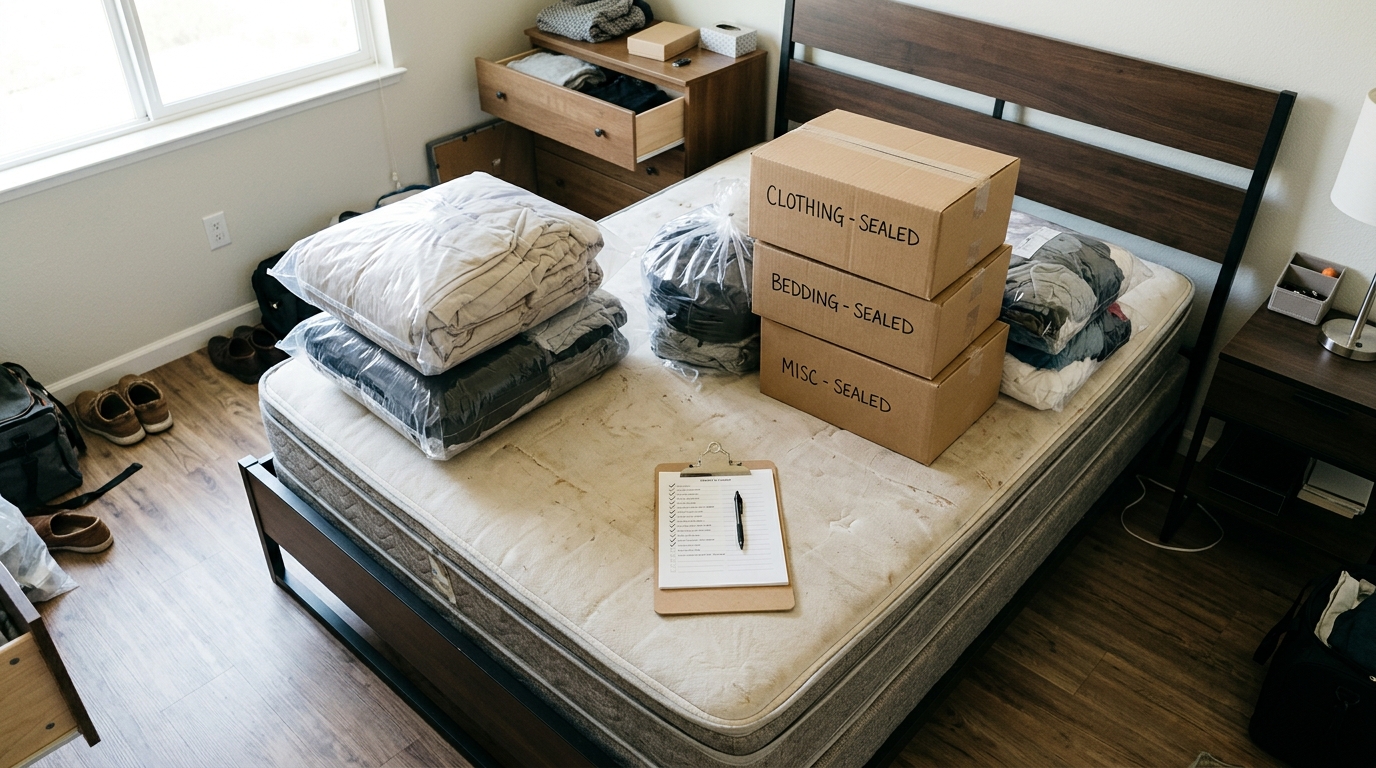
Proper preparation before bed bug treatment isn’t optional—it’s the difference between success and re-infestation. When you schedule targeted bed bug extermination with Promax Bed Bug Experts, you’ll receive this bed bug treatment preparation checklist to ensure our residual liquid insecticides and insect growth regulators (IGRs) reach every hiding spot where bed bugs live.
We’ve refined this process over 11 years serving Passaic County and northern New Jersey. Homes that follow this prep protocol see significantly better first-treatment results. The work takes 4-6 hours for an average two-bedroom home. Start at least 48 hours before your scheduled treatment.
Call 1-877-323-3284 with questions about any step. Our technicians can clarify what’s required for your specific infestation.
Why Preparation Matters for Targeted Bed Bug Treatment
Bed bugs hide in cracks smaller than a credit card’s thickness. They tuck behind baseboards, inside electrical outlets, between floorboards, and deep in furniture seams. Targeted treatments work by creating a residual barrier and direct contact kill, but insecticides can’t penetrate clutter, sealed containers, or items piled against walls.
Poor preparation leaves hiding spots untreated. Surviving bed bugs reproduce quickly—a single fertilized female lays 200-500 eggs in her lifetime. The goal of this bed bug treatment prep guide is to expose every surface and eliminate barriers between pesticides and pests.
Complete Bed Bug Treatment Preparation Checklist
Use this room-by-room guide. Print it, check boxes as you go, and keep it handy during prep work.
Downloadable Prep Checklist
Complete these tasks 24-48 hours before treatment:
Laundry Protocol (All Bedrooms)
- ☐ Strip all bedding: sheets, pillowcases, mattress pads, comforters, blankets
- ☐ Remove all clothing from dressers, closets, and hampers
- ☐ Wash everything in hottest water fabric allows (minimum 120°F)
- ☐ Dry on high heat for minimum 30 minutes (heat kills all life stages)
- ☐ Place clean items immediately into NEW sealed plastic bags
- ☐ Label bags clearly: “CLEAN – DO NOT OPEN UNTIL AFTER TREATMENT”
- ☐ Store sealed bags in center of rooms away from walls
- ☐ Wash curtains, throw pillows, stuffed animals—anything fabric
Furniture & Decluttering
- ☐ Pull beds, dressers, nightstands 3-4 feet from walls (all sides)
- ☐ Remove items from under beds completely
- ☐ Empty all dresser drawers; leave drawers in place but empty
- ☐ Remove items from closet floors
- ☐ Take down wall hangings, picture frames, mirrors, clocks
- ☐ Bag and remove clutter (shoes, boxes, magazines, toys)
- ☐ Do NOT use black trash bags to remove items from home—this spreads infestation
- ☐ Items leaving home must be treated first (heat dried) or discarded in sealed clear bags
Vacuuming & Disposal
- ☐ Vacuum all floors, baseboards, and carpet edges thoroughly
- ☐ Vacuum mattress seams, box spring fabric, bed frame joints
- ☐ Vacuum furniture seams, cushion edges, under cushions
- ☐ Immediately remove vacuum bag/empty canister into sealed plastic bag
- ☐ Dispose of vacuum contents in outdoor trash immediately
- ☐ If discarding infested furniture, wrap entirely in plastic, label “BED BUGS,” and arrange bulk pickup
Mattresses & Box Springs
- ☐ Leave mattresses and box springs on bed frames (do not remove)
- ☐ Remove mattress protectors for washing (if present)
- ☐ After treatment, consider certified bed-bug-proof encasements (ask technician for recommendations)
- ☐ Do NOT wrap mattresses in plastic before treatment—prevents insecticide penetration
Kitchen & Bathrooms
- ☐ Remove items from under sinks
- ☐ Clear bathroom vanity drawers
- ☐ Wash bathmats, shower curtains, towels (high heat dry, seal in bags)
- ☐ Empty linen closets; wash all towels and linens
Living Areas & Common Spaces
- ☐ Pull sofas, recliners, and chairs 3 feet from walls
- ☐ Remove sofa cushions; leave in room for treatment
- ☐ Vacuum all upholstery seams and tufting
- ☐ Remove items from entertainment centers, bookcases, shelves
- ☐ Bag children’s toys; wash soft toys, wipe hard toys with damp cloth
Special Items
- ☐ Books: if bed bugs present, place in sealed bags for 3-4 months OR freeze for 4 days at 0°F
- ☐ Electronics: wipe exteriors, leave in place for technician inspection
- ☐ Papers/documents: place in sealed plastic bins if near infestation area
Day of Treatment
- ☐ Remove pets, pet food/water bowls, and pet bedding
- ☐ Remove or cover fish tanks (turn off pumps during treatment)
- ☐ Remove plants from treatment areas
- ☐ Vacate home: all people and pets must leave for 4-6 hours
- ☐ Provide access to all rooms, closets, attics, basements
- ☐ Unlock or open any locked storage areas
Critical Do’s and Don’ts for Bed Bug Treatment Prep
DO: Heat-Treat All Fabrics
Heat above 120°F kills bed bugs instantly. Your washer’s hot cycle combined with 30+ minutes of high-heat drying eliminates all life stages. This is the most reliable DIY step you can take. Dry-clean-only items should go to a cleaner who will use high-heat pressing—inform them of bed bugs first.
DON’T: Move Items Between Rooms Without Treatment
The fastest way to spread bed bugs is moving infested items to “safe” rooms. If you must relocate something, treat it first (hot wash/dry) and seal it in a new plastic bag. Never use the same bag twice. Black trash bags moving out your door signal to neighbors that you’re disposing of infested materials—use clear bags and label appropriately or arrange professional disposal.
DO: Pull Furniture Away from Walls
Our technicians treat baseboards, wall junctions, and floor cracks where bed bugs travel. Furniture flush against walls blocks access. Three to four feet of clearance allows complete coverage with residual liquid insecticides that create killing zones for weeks after application.
DON’T: Use Bug Bombs or Foggers Before Professional Treatment
Over-the-counter foggers scatter bed bugs deeper into walls and voids. They don’t kill eggs. They create pesticide resistance. If you’ve used foggers in the past week, inform your technician—we may need to adjust our targeted protocol.
DO: Vacuum Thoroughly, Then Dispose Immediately
Vacuuming removes eggs, shed skins, and fecal spots. It reduces population size before treatment. But bed bugs can crawl out of vacuum bags and canisters. Seal the bag in plastic and take it to your outdoor trash within minutes of finishing. If you use a bagless vacuum, empty the canister into a sealed bag, then wipe the canister interior with a damp paper towel.
DON’T: Remove Mattresses or Box Springs from Frames
Leave mattresses in place. Our technicians treat bed frames, headboards, and the mattress/box spring in position. Moving them risks dropping eggs in new locations. After treatment, ask about certified bed-bug-proof encasements—these trap any survivors inside and prevent new bugs from entering.
What to Leave in Place
You don’t need to empty your entire home. Leave these items where they are:
- Large appliances: Refrigerators, stoves, washers, dryers stay in place unless infestation is directly behind them
- Heavy furniture: Armoires, china cabinets, pianos—just pull away from walls if possible
- Electronics: TVs, computers, game consoles can be treated in place (we avoid direct spray on screens)
- Non-fabric wall décor: Wooden or metal wall art without fabric backing
- Kitchen items: Dishes, utensils, pots, pans in cabinets (unless cabinets are directly adjacent to infested bedrooms in small apartments)
When in doubt, call 1-877-323-3284. We’ll talk through your specific layout and infestation severity.
Managing Kids, Pets, and Plants During Treatment
Children and Infants
All children must leave during treatment and stay away for the full re-entry period (typically 4 hours). Pack a bag with fresh clothes (heat-treated per the laundry protocol), diapers, formula, and toys. Do not bring these items back into the home until after re-entry time. If you’re breastfeeding, you can return when the home is safe—no additional precautions needed for nursing after re-entry.
Pets
Remove dogs, cats, birds, reptiles, and small mammals. Take them to a friend’s house, pet daycare, or keep them in your car during treatment if weather permits. Remove food bowls, water dishes, beds, toys, and litter boxes. Fish tanks can remain if covered with a damp towel and pumps turned off. Ask our technician to notify you when it’s safe to restart pumps.
Plants
Houseplants should be moved to untreated areas (garage, outdoor patio) or removed entirely. Insecticides can damage sensitive foliage. If plants are in the same room as treatment, relocate them.
Re-Entry Timing and What to Expect After Treatment
Most targeted bed bug treatments require 4 hours of ventilation before re-entry. Our technician will give you a specific time based on the products used and the size of your home. When you return:
- Ventilate: Open windows for 15-20 minutes
- Don’t deep-clean: Avoid mopping, vacuuming, or washing treated surfaces for 2-3 weeks—this removes the residual insecticide barrier
- Light cleaning only: Wipe kitchen counters and food prep surfaces with a damp cloth, but leave baseboards, floors, and furniture undisturbed
- Replace bedding: Put fresh sheets on beds (from your sealed clean bags), but don’t wash the mattress or vacuum it
- Monitor: You may see dead bed bugs for 7-10 days as the insecticides work—this is normal and expected
Post-Treatment Instructions: What NOT to Do
The days following treatment are critical. Residual insecticides continue killing for weeks if left undisturbed. Do NOT:
- Mop or steam-clean floors for 21 days
- Vacuum baseboards or carpet edges for 14 days
- Wash walls or wipe down treated surfaces
- Move furniture back against walls for 7 days
- Unpack sealed bags of clean laundry until technician confirms treatment success (usually at 2-week follow-up)
- Introduce used furniture, mattresses, or secondhand items into your home for at least 60 days
Most infestations require a follow-up treatment 10-14 days after the initial service to target newly hatched nymphs. Bed bug eggs can survive targeted treatment, so the second application catches the next generation before they reproduce. Your technician will schedule this during the first visit.
How Long Does Bed Bug Treatment Preparation Take?
| Home Size | Infestation Level | Prep Time |
|---|---|---|
| Studio/1-Bedroom | Light (one room) | 3-4 hours |
| 2-Bedroom | Moderate (2-3 rooms) | 5-6 hours |
| 3+ Bedroom | Severe (whole-home) | 8-10 hours |
| Multi-Family/Apartment | Any level | Add 1-2 hours for coordination with neighbors |
Laundry is the most time-intensive step. If you have multiple loads, start 48 hours early and run machines continuously. Enlist family members—one person sorts and bags, another manages washer/dryer cycles, a third handles sealing and labeling.
Special Considerations for Apartments and Multi-Family Homes
Bed bugs don’t respect unit boundaries. They travel through wall voids, electrical conduits, and plumbing chases. If you live in an apartment:
- Notify your landlord immediately: Many leases require reporting infestations within 24-48 hours
- Coordinate with neighbors: Adjacent units may need inspection and treatment
- Don’t move out: Breaking your lease and relocating without treating your belongings spreads bed bugs to your new home
- Follow building-wide protocols: Property management may have additional prep requirements
Promax Bed Bug Experts works with landlords and property managers throughout Passaic County. We can coordinate multi-unit treatments and provide documentation for lease compliance.
What If I Can’t Complete All Prep Steps?
Contact us at 1-877-323-3284 before your appointment. We can:
- Reschedule to give you more prep time (no charge if you call 24+ hours ahead)
- Provide modified prep instructions for specific situations (mobility limitations, hoarding conditions, limited English proficiency)
- Recommend prep assistance services for elderly or disabled residents
Incomplete prep reduces treatment effectiveness. We’d rather delay and do it right than treat a poorly prepared home and leave survivors.
Ready to Schedule Your Bed Bug Treatment?
You’ve got the checklist. You know the protocol. Now let’s get your home bed-bug-free.
Promax Bed Bug Experts — 11 Years Serving Passaic County
Licensed targeted bed bug extermination. Follow-up treatments included. 24/7 emergency response.
Call 1-877-323-3284
Email: [email protected]
Serving Passaic, Bergen, Essex, and Morris Counties
Frequently Asked Questions About Bed Bug Treatment Preparation
Do I really need to wash everything, or can I just bag clothes and leave them sealed?
Sealing without heat treatment doesn’t kill bed bugs—it just traps them with your clothes. Adult bed bugs survive 4-6 months without feeding. Nymphs last 2-3 months. Eggs remain viable for weeks. If you bag items without washing, you’ll re-introduce live bugs when you open the bags. The hot wash (120°F+) and high-heat dry (30 minutes minimum) kills all life stages instantly. This step is non-negotiable for successful treatment.
Can I use a portable heater or space heater to heat-treat items instead of washing?
Portable heaters don’t reach the sustained 120°F+ required to kill bed bugs in all layers of fabric or inside furniture. Professional heat treatment requires specialized equipment that maintains precise temperatures. For how to prepare for bed bug treatment at home, stick to your washer and dryer. Items that can’t be laundered (shoes, books, electronics) can be frozen at 0°F for 4 consecutive days as an alternative, but most home freezers don’t get cold enough or maintain stable temps.
What happens if I find bed bugs in my child’s stuffed animal collection or my book collection?
Stuffed animals: wash and dry on high heat if care labels allow. If not machine-washable, seal in plastic bags and place in your freezer (0°F) for 4 days, or leave sealed for 4-5 months until all bugs starve. Books: bag them and freeze, or seal for 3-4 months. You can also place books in a black plastic bag in direct sunlight on a 95°F+ day (interior temps reach 120°F+), but this requires careful monitoring. Ask your technician for guidance on valuable or sentimental items—we sometimes recommend targeted spot treatments.
How soon after treatment can I unpack my sealed bags of clean laundry?
Wait until your technician confirms treatment success, typically at your 2-week follow-up inspection. If we find no live bed bugs or new fecal spots, you can unpack. Open bags in the treated rooms, not in previously unaffected areas. Wash items again before use if they’ve been sealed for more than 3 weeks (condensation can cause musty odors). Never unpack in your car or garage—if any bugs survived in the bags, you’ll spread them.
Do I need to throw away my mattress and box spring?
Usually no. Targeted treatment can effectively treat mattresses and box springs in place. Discarding them is expensive and unnecessary in most cases. After treatment, we recommend certified bed-bug-proof encasements—these zippered covers trap any remaining bugs inside (where they’ll starve) and prevent new bugs from infesting. Encasements cost $50-150 depending on size, far less than new mattresses. Only discard if the mattress is heavily stained, torn, or if you prefer a fresh start for peace of mind.
Can I stay in my home during the bed bug treatment, or do I have to leave?
You must vacate during application and for the full re-entry period (typically 4 hours). Targeted insecticides used in bed bug treatment—residual liquids, aerosols, and dusts—pose inhalation risks during application. Once dried and ventilated, they’re safe for humans and pets. Plan to leave before the technician arrives and return only when given the all-clear. If you have nowhere to go, discuss options when you call 1-877-323-3284—we can sometimes adjust scheduling to minimize displacement time.
What if I have mobility issues or physical disabilities that make this prep impossible?
Contact us before your appointment. We work with senior residents, disabled clients, and those with hoarding disorder regularly. We can provide modified prep instructions focusing on the highest-priority steps (laundry, furniture pull-away, pet removal) and adjust our treatment approach for areas you can’t prepare. Some clients hire cleaning services or ask family members to help. In extreme cases, we can refer you to social services that assist with pest control preparation. Don’t cancel treatment out of embarrassment—we’ve seen every situation and want to help you succeed.
Will one treatment be enough, or will I need multiple visits?
Most residential infestations require a minimum of two treatments spaced 10-14 days apart. The first treatment kills active adults and nymphs. Eggs can survive and hatch 6-9 days later. The second treatment targets this new generation before they mature and reproduce. Severe infestations or multi-family buildings may need 3-4 treatments. Your technician will assess during the first visit and create a customized follow-up schedule. Proper preparation for each visit—following this bed bug treatment preparation checklist—dramatically improves the likelihood of complete elimination within two treatments.
Bed Bugs Won’t Wait — Neither Should You
24/7 emergency service across Passaic County and northern NJ. Free phone estimates.