
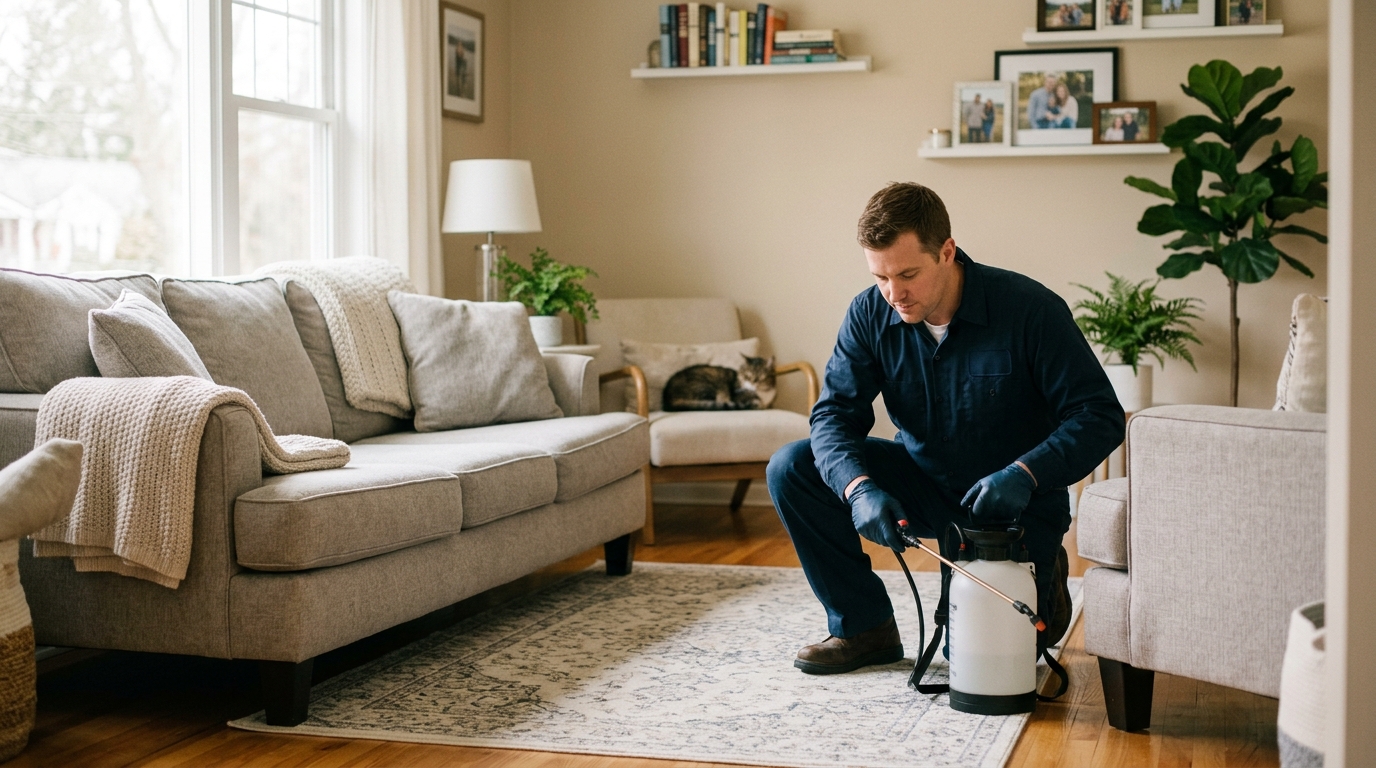
Bed bugs don’t discriminate between houses and apartments. Whether you live in a Passaic County single-family home or a high-rise condo in Bergen County, residential bed bug treatment in NJ requires precision, persistence, and products that actually work. Promax Bed Bug Experts has spent 11 years treating homes across northern New Jersey, and we know exactly what it takes to eliminate infestations in residential settings.
We use EPA-registered targeted treatments designed for residential environments—no heat trucks blocking your driveway, no fumigation tents alarming your neighbors. Our approach is discreet, thorough, and built around your family’s schedule. Call 1-877-323-3284 for 24/7 emergency response and same-day treatment availability.
How Residential Bed Bug Treatment Works in NJ Homes
Effective home bed bug removal targets every life stage: eggs, nymphs, and adults. A single female can lay 200-500 eggs in her lifetime, so missing even a few means the infestation rebounds within weeks. Our residential treatment protocol combines three targeted categories to break the reproductive cycle.
We apply residual liquid insecticides to baseboards, bed frames, furniture joints, and other harborage points. These products continue killing bed bugs for weeks after application. Insect growth regulators (IGRs) prevent nymphs from maturing into reproducing adults. Aerosol contact treatments provide immediate knockdown of visible bugs during the service visit.
Treatment takes 2-4 hours depending on home size and infestation severity. We inspect every bedroom, living area, and adjacent space. Bed bugs travel 20 feet per night seeking blood meals, so treating only one bedroom rarely works in residential settings.
What Happens During Your First Visit
- Visual inspection of mattresses, box springs, bed frames, headboards, and furniture
- Identification of harborage sites using flashlights and inspection mirrors
- Application of EPA-registered residual insecticides to all identified and potential hiding spots
- Treatment of baseboards, outlets, carpet edges, and furniture undersides
- IGR application to disrupt nymph development cycles
- Written documentation of treatment areas and product categories used
- Re-entry and preparation instructions for your follow-up visit
Single-Family Homes vs. Multi-Unit Buildings
The biggest difference in apartment bed bug treatment in NJ versus house treatment is containment. In single-family homes, bed bugs typically stay within your four walls. In multi-unit buildings, they travel through wall voids, electrical conduits, and shared plumbing.
We treat apartments with this migration in mind. If you’re in a condo or apartment complex, we recommend notifying your property management so adjacent units can be inspected. Treating your unit while ignoring a neighboring infestation is like bailing water from a boat with holes in the hull.
| Property Type | Treatment Considerations | Typical Visit Count |
|---|---|---|
| Single-Family Home | Self-contained; focus on bedrooms, living areas, and items brought from travel or used furniture purchases | 2-3 visits over 4-6 weeks |
| Apartment/Condo | Check adjacent units; treat shared walls; coordinate with building management for comprehensive approach | 3-4 visits; may require building-wide inspection |
| Townhouse | Shared walls increase risk; treat connecting walls thoroughly; communicate with attached neighbors | 2-3 visits; inspect shared wall areas carefully |
Most single-family homes in Passaic County, Morris County, and Essex County see successful elimination within three treatment visits spaced 10-14 days apart. Apartments may require additional visits if neighboring units have active infestations.
Treatment Protocols for Different Rooms
Not every room in your home gets the same treatment intensity. We focus efforts where bed bugs actually live and breed—within 10 feet of where people sleep or sit for extended periods.
Bedrooms and Sleeping Areas
This is ground zero for any house bed bug exterminator service. We treat mattress seams (though not the sleeping surface itself), box springs, bed frames, headboards, nightstands, and everything within a 15-foot radius of the bed. Baseboards, carpet edges, electrical outlets, picture frames, and closet interiors all receive attention.
For children’s rooms, we use the same EPA-registered products applied to adult bedrooms. These products have been evaluated for residential use and pose minimal risk when applied correctly. We provide specific re-entry timing to ensure safety.
Living Rooms and Common Areas
Couches, recliners, and upholstered furniture get inspected and treated. Bed bugs hide in seams, zippers, cushion folds, and underneath furniture. We treat around entertainment centers, bookshelves, and anywhere clutter accumulates. Picture frames, electrical outlets, and baseboards receive residual applications.
What We Don’t Treat
Kitchen counters, food preparation surfaces, and areas where EPA labeling prohibits insecticide application remain untreated. Bed bugs don’t infest kitchens or bathrooms because those rooms lack the carbon dioxide cues and warmth of sleeping humans. If we find bugs in a bathroom, they’re transiting from an adjacent bedroom.
Family-Safe Re-Entry and Preparation Requirements
You cannot stay in your home during treatment. Most EPA-registered insecticides used for residential bed bug control require 3-4 hours of ventilation before safe re-entry. We provide exact timing based on which products we apply and your home’s square footage.
Before we arrive: Strip bedding and wash/dry on high heat for 30 minutes. Remove items from floors. Pull beds and furniture 6-12 inches from walls. Do not discard mattresses or furniture—you’ll spread bugs to other homes, and most infestations are treatable without throwing anything away.
After treatment: Do not vacuum treated areas for 14 days (you’ll remove residual insecticide). Do not wash baseboards or treated surfaces. Do not sleep in untreated rooms—you’ll relocate the infestation. Follow our written instructions precisely. Half of treatment failures we see from other companies happen because residents cleaned or vacuumed too soon.
Follow-Up Visits and Why They Matter
The first treatment kills most adults and nymphs. It does not kill all eggs. Some eggs are laid in cracks so tight that spray doesn’t penetrate. Other eggs simply haven’t hatched yet. This is why residential bed bug treatment requires multiple visits.
We schedule the second visit 10-14 days after the first. Newly hatched nymphs encounter residual insecticide left from visit one, but we re-apply to ensure fresh coverage. By visit two, we expect to see significantly reduced activity. Visit three, scheduled another 10-14 days later, targets any remaining survivors.
Apartments and multi-unit buildings may require a fourth visit if neighboring units have active infestations or if residents have difficulty completing preparation steps.
Cost Transparency for Residential Treatment
Pricing varies based on home size, infestation severity, and property type. A 900-square-foot apartment costs less than a 3,000-square-foot house. Light infestations (bugs found in one bedroom) cost less than severe infestations (bugs in multiple rooms, visible during daytime).
Most single-family home treatments in Passaic County range from $500-$1,500 for the first visit, with follow-up visits at reduced rates. Apartment treatments typically range $400-$1,200 for initial service. Multi-unit buildings may qualify for volume pricing if property management coordinates treatment across several units simultaneously.
We provide free phone consultations and can give accurate quotes after asking about your property size, number of affected rooms, and infestation severity. Call 1-877-323-3284 to discuss your specific situation and get transparent pricing before we schedule anything.
What Makes Residential Different from Commercial Treatment
Homes have more clutter, more fabrics, more hiding spots. Commercial properties (hotels, offices, hospitals) have standardized furniture and professional cleaning schedules. Residential settings require more meticulous inspection because people accumulate belongings—books, clothes, storage bins, kids’ toys, decorations.
We also move slower in homes. Hotels need rooms turned over quickly. Your home is where you sleep every night, so we take extra time explaining what we’re doing, answering questions, and making sure you’re comfortable with the process. We work around your schedule, including evenings and weekends.
Why Choose Promax Bed Bug Experts for Your Home
We’ve treated homes across Passaic County and expanding service into Bergen, Essex, and Morris counties for 11 years. We’re licensed, we use only EPA-registered products, and we explain everything in plain language. No surprise fees. No pressure tactics. No claims that one treatment solves everything.
Bed bugs are frustrating enough without dealing with companies that don’t answer their phones or show up late. We offer 24/7 emergency response because bed bug anxiety doesn’t follow business hours. When you call, you talk to someone who actually knows bed bug biology and treatment protocols—not a call center reading a script.
Our email is [email protected] if you prefer written communication. Our website at www.bedbugsnj.com has additional resources about preparation, treatment expectations, and prevention tips.
Get Professional Residential Bed Bug Treatment Today
Don’t let bed bugs take over your home. Promax Bed Bug Experts provides thorough, family-safe treatment for houses, apartments, and condos across northern New Jersey. We use proven targeted protocols, provide clear re-entry instructions, and schedule follow-up visits to ensure complete elimination.
Call 1-877-323-3284 now for same-day service availability. We’re available 24/7 for emergency response in Passaic County and surrounding areas. Free phone consultations. Transparent pricing. Licensed professionals who actually show up on time.
Frequently Asked Questions About Residential Bed Bug Treatment in NJ
How long does residential bed bug treatment take?
The initial treatment typically takes 2-4 hours depending on your home’s size and the infestation’s severity. Smaller apartments may take closer to 2 hours, while larger single-family homes with multiple affected rooms can take 3-4 hours. You’ll need to stay out of your home for 3-4 hours after we finish to allow proper ventilation before safe re-entry.
Do I need to throw away my mattress or furniture?
Almost never. Most bed bug infestations are fully treatable without discarding furniture. Throwing out items can actually spread bugs to other homes and waste money replacing perfectly good furniture. We treat mattresses, box springs, couches, and other furniture in place. Only discard items if they’re already damaged or if our inspection reveals structural issues unrelated to bed bugs.
When can my family safely return home after treatment?
Most residential treatments require 3-4 hours of ventilation before safe re-entry. We provide specific timing based on your home’s square footage and which EPA-registered products we applied. Open windows during this period if weather permits. Once the re-entry time has passed, your home is safe for children, pets, and adults. The residual insecticide remains effective but poses minimal exposure risk when dry.
Why do I need multiple treatment visits?
Bed bug eggs are resistant to most insecticides. The first treatment kills adults and nymphs but not all eggs. Those eggs hatch 6-10 days later, producing new nymphs that need targeting. Follow-up visits scheduled 10-14 days apart catch newly hatched bugs before they mature into egg-laying adults. Skipping follow-up visits is the most common reason residential treatments fail.
Will treatment affect my pets?
Pets must leave the home during treatment and stay out during the ventilation period (typically 3-4 hours). Once you’re cleared to re-enter, pets can return safely. We treat areas where bed bugs hide—baseboards, furniture, bed frames—not areas where pets eat or drink. Remove pet food bowls, water dishes, and toys before treatment, then return them afterward. Bed bugs don’t infest pets, so your animals won’t carry bugs after treatment.
What if I live in an apartment and my neighbor has bed bugs?
Notify your property management immediately. Bed bugs travel between apartment units through wall voids, electrical conduits, and plumbing chases. Treating your unit while ignoring an adjacent infestation means bugs will simply re-enter from next door. Responsible property managers will inspect neighboring units and coordinate treatment. If management won’t act, document everything in writing and treat your unit knowing additional visits may be necessary.
How much does residential bed bug treatment cost in New Jersey?
Most single-family homes in Passaic County range from $500-$1,500 for the initial treatment, with follow-up visits at reduced rates. Apartments typically cost $400-$1,200 for the first service. Final pricing depends on your home’s square footage, number of affected rooms, and infestation severity. We provide free phone quotes after discussing your specific situation. Call 1-877-323-3284 for transparent pricing with no obligation to book.
Can I do bed bug treatment myself instead of hiring professionals?
Retail bed bug products available to consumers are significantly weaker than professional-grade EPA-registered insecticides. Most DIY attempts fail because people under-apply product, miss hidden harborage sites, or don’t understand bed bug biology well enough to break the reproductive cycle. You’ll spend weeks fighting the infestation while it spreads to more rooms. Professional treatment costs more upfront but actually eliminates the problem instead of temporarily suppressing it.
Bed Bugs Won’t Wait — Neither Should You
24/7 emergency service across Passaic County and northern NJ. Free phone estimates.