Can You See Bed Bugs With the Naked Eye?
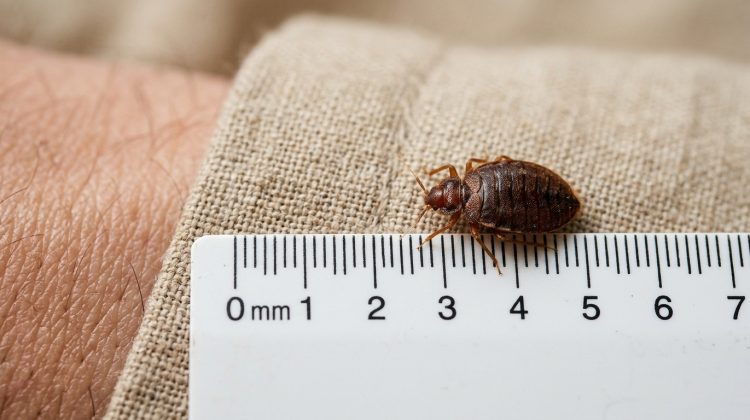
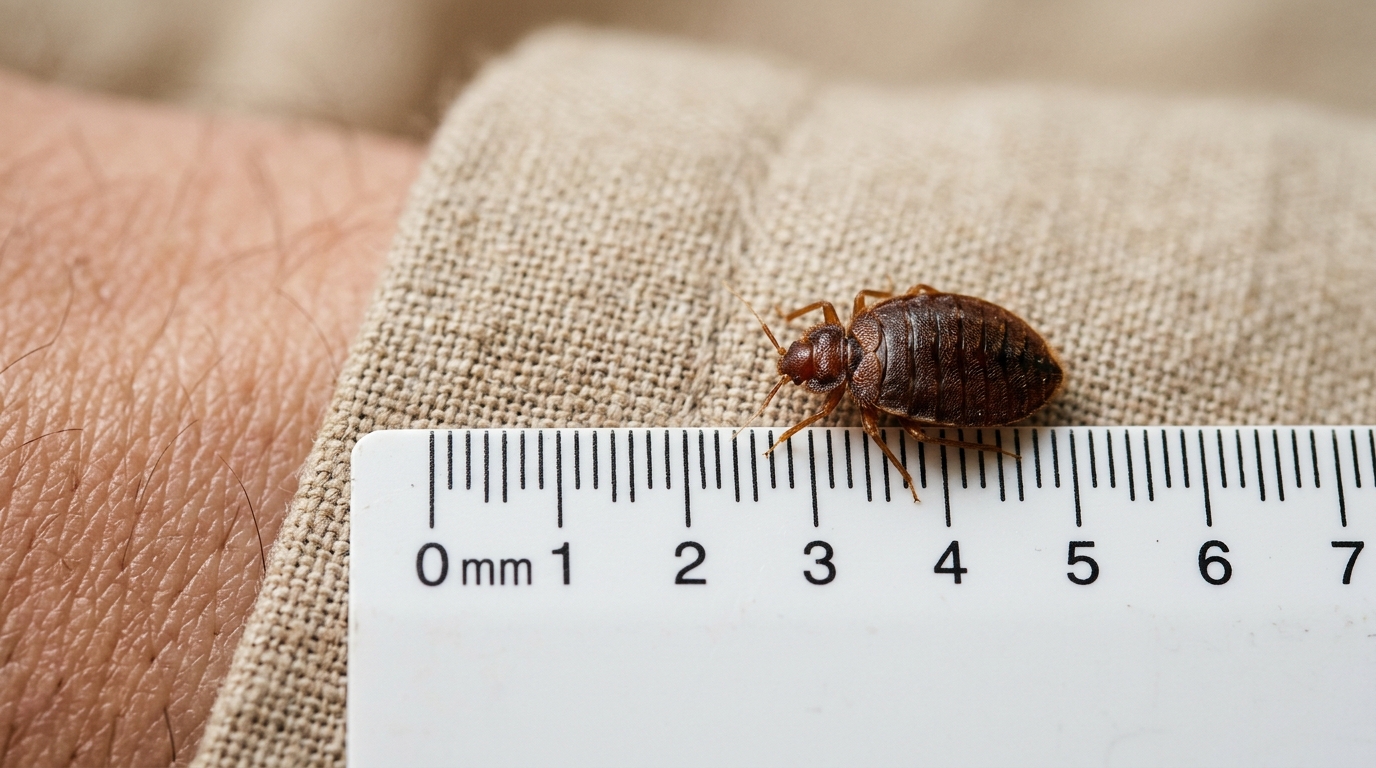
Yes, you can see bed bugs with the naked eye. Adult bed bugs measure approximately 4 to 7 millimeters in length—roughly the size of an apple seed—making them clearly visible without magnification. However, younger bed bugs (nymphs) and eggs are significantly smaller, and while still technically visible, they require good lighting and careful observation to detect. The smallest nymphs measure just 1 to 1.5 millimeters, about the size of a pinhead, and eggs are only 1 millimeter long, making them the most challenging to spot without aid.
The question isn’t whether bed bugs are large enough to see, but whether conditions allow you to see them. Their translucent coloring when young, their habit of hiding in tight cracks during daylight hours, and their speed when disturbed all contribute to detection difficulty despite their visible size.
How Big Are Bed Bugs at Each Life Stage?
Bed bug size varies dramatically depending on life stage, which directly affects visibility. Understanding these size differences helps you know what to look for during an inspection.
Adult bed bugs are the easiest to identify. They measure 4 to 7 millimeters in length and 1.5 to 3 millimeters in width. After feeding, adults become engorged and can swell to 10 millimeters, appearing darker and more elongated. Their flat, oval shape when unfed allows them to squeeze into cracks as thin as a credit card.
Nymphs—immature bed bugs—pass through five growth stages called instars. First-instar nymphs emerge from eggs at just 1 to 1.5 millimeters, roughly the size of a poppy seed. With each molt, they grow larger: second instars reach about 2 millimeters, third instars grow to 2.5 millimeters, fourth instars measure approximately 3 millimeters, and fifth instars reach 4 millimeters before their final molt into adults. These younger stages appear translucent or pale yellow until they feed, when they become bright red from ingested blood.
Bed bug eggs measure only 1 millimeter in length—about the size of two grains of salt placed end to end. They’re pearl-white and slightly curved, with a sticky coating that helps them adhere to surfaces. Eggs are often laid in clusters of 10 to 50 in tight crevices, making them difficult to spot even though they’re technically within the threshold of human vision.
| Life Stage | Length (mm) | Common Size Comparison | Visibility Without Magnification |
|---|---|---|---|
| Egg | 1 mm | Pinhead, two salt grains | Difficult—requires bright light and close inspection |
| 1st Instar Nymph | 1–1.5 mm | Poppy seed | Challenging—translucent, easily missed |
| 2nd–5th Instar Nymphs | 2–4 mm | Sesame seed to half an apple seed | Visible with good lighting |
| Adult (unfed) | 4–7 mm | Apple seed, lentil | Clearly visible |
| Adult (fed) | Up to 10 mm | Small grape seed, swollen tick | Very visible—engorged and dark |
Bed Bug Size Compared to Common Objects and Insects
Visual comparisons help calibrate your eye when searching for bed bugs. Adult bed bugs are frequently compared to apple seeds—both in size and shape when unfed. This comparison is accurate for length (5 to 7 millimeters) and the flat, oval profile.
Other useful size references include:
- Sesame seed: A good match for third- to fourth-instar nymphs (2.5 to 3.5 millimeters)
- Poppy seed: Comparable to first-instar nymphs and eggs (1 to 1.5 millimeters)
- Lentil: Similar to larger adult bed bugs in both size and shape
- Head of a pin: Roughly the size of a bed bug egg or newly hatched nymph
- Lincoln’s head on a penny: Approximately 3 millimeters, useful for gauging mid-stage nymphs
When compared to other household insects, bed bugs are smaller than most adult cockroaches (which range from 13 to 50 millimeters depending on species) but similar in size to ticks. An engorged deer tick measures 3 to 5 millimeters, comparable to a mid-stage bed bug nymph. Bed bugs are slightly larger than fleas (1.5 to 3 millimeters) but lack the jumping ability. They’re significantly smaller than mosquitoes, which measure 6 to 12 millimeters in body length including legs and wings—though bed bugs’ wingless, flat profile makes them appear more compact.
Why Bed Bugs Are Hard to Spot Despite Being Visible
Are bed bugs visible to the naked eye? Yes. Are they easy to find? Often, no. Several factors interfere with detection even when bed bugs are large enough to see clearly.
Bed bugs are nocturnal and spend daylight hours hidden in tight crevices, seams, cracks, and voids. They prefer spaces where their flattened bodies touch surfaces on both sides—behind baseboards, inside screw holes, within box spring staple lines, and along mattress piping. During inspections, you’re searching for insects actively concealing themselves, not insects in plain view.
Coloration provides effective camouflage. Unfed adults range from reddish-brown to mahogany, blending with wood furniture, leather, and darker fabrics. Nymphs are translucent yellowish-white before feeding, making them nearly invisible against light-colored sheets or painted surfaces. Only after feeding do they become conspicuously red or purple, but they quickly retreat to hiding spots after meals.
Their small size relative to hiding spaces means you often see signs of infestation—fecal spots, shed skins, bloodstains—before seeing the insects themselves. According to the EPA’s guidance on finding bed bugs, evidence like dark fecal staining and cast skins may be your first clue, especially in light infestations where bug populations are low.
Room lighting is rarely sufficient for effective inspection. Standard overhead bulbs create shadows in the exact crevices where bed bugs hide. Professional inspections use high-intensity LED flashlights (200+ lumens) held at oblique angles to eliminate shadows and illuminate recessed areas. Without proper lighting, even large adult bed bugs remain hidden in plain sight.
Key takeaway: Bed bugs are absolutely visible without magnification, but finding them requires understanding where they hide, using bright directional lighting, and inspecting seams and crevices methodically rather than scanning open surfaces.
What to Do If You Suspect Bed Bugs
If you’ve seen what you believe are bed bugs—or found the telltale signs like fecal spots, shed skins, or unexplained bites—prompt action prevents a limited problem from becoming a whole-home infestation.
Begin with a thorough visual inspection using a bright flashlight and a credit card or similar thin tool to pry into seams and crevices. Focus on the bed frame, mattress seams and piping, box spring corners, headboard cracks, and nearby furniture within 10 feet of where people sleep. Check behind wall hangings, inside bedside table drawers, and along baseboards. Look for live bugs, shed skins (which look like empty translucent shells), dark fecal staining (which appears as tiny black dots), and eggs clustered in protected areas.
If you find evidence but aren’t certain, capture a specimen in a sealed plastic bag or on clear tape and have it identified. Many local extension offices provide free identification services, or you can send a clear photo to a licensed pest control company for confirmation.
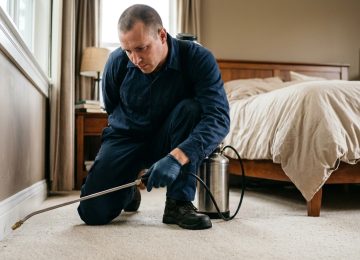
Once confirmed, contact a licensed professional. Effective bed bug management requires targeted treatment applications to all harborage areas, use of insect growth regulators to disrupt reproduction, and follow-up visits to address newly hatched nymphs. DIY approaches typically fail because over-the-counter products lack the residual effectiveness needed to eliminate all life stages, and untrained application misses the cryptic hiding spots where bed bugs shelter.
If you’re in northern New Jersey and want a professional inspection, call 1-877-323-3284 for a free phone estimate. Anywhere else, look for a licensed local exterminator with same-day availability.
Preparation steps include decluttering to eliminate hiding spots, laundering bedding and clothing in hot water (at least 120°F) followed by high-heat drying, and vacuuming thoroughly to remove loose insects and eggs. Do not move infested items to other rooms—this spreads the problem. Avoid foggers or total-release aerosols, which drive bed bugs deeper into walls and voids without eliminating them.
Frequently Asked Questions
Do you need a magnifying glass to see bed bugs?
No, you don’t need a magnifying glass to see adult bed bugs or larger nymphs. Adults at 4 to 7 millimeters are clearly visible to the naked eye under good lighting. Magnification helps when inspecting for eggs (1 millimeter) or first-instar nymphs (1 to 1.5 millimeters), but even these are technically visible without magnification if lighting is adequate and you know where to look. A bright flashlight is more important than magnification for most inspections.
What color are bed bugs and does it affect visibility?
Unfed adult bed bugs are reddish-brown to mahogany, similar to the color of apple seeds. After feeding, they become darker and more purple or red from ingested blood. Nymphs are translucent yellowish-white before feeding, which makes them harder to see against light surfaces. After feeding, nymphs turn bright red and become much more visible. Color does affect visibility—unfed nymphs and bugs on dark fabrics are the most difficult to spot.
How big are bed bugs compared to ticks?
Bed bugs and ticks are similar in size, which sometimes causes confusion. An adult bed bug measures 4 to 7 millimeters, comparable to an unfed deer tick (3 to 5 millimeters). Engorged ticks swell larger than bed bugs. The key difference is body shape: bed bugs are flat and oval, while ticks have a rounded, teardrop shape. Ticks also have eight legs (they’re arachnids), whereas bed bugs have six legs (they’re insects).
Can you see bed bug eggs without a microscope?
Yes, bed bug eggs are visible without a microscope, but they’re challenging to spot. At 1 millimeter in length and pearl-white in color, eggs are about the size of two grains of salt placed end to end. You’ll have the best chance of seeing them with a bright flashlight in the seams and crevices where they’re typically laid. They’re often clustered together, which makes groups easier to identify than individual eggs. A magnifying glass helps but isn’t required.
Are baby bed bugs visible or too small to see?
Baby bed bugs—called first-instar nymphs—are visible but very small at 1 to 1.5 millimeters. They’re roughly the size of a poppy seed and appear translucent or pale yellowish-white until they feed. Under bright lighting and with careful inspection, they can be seen without magnification, but they’re easily overlooked due to their size and coloring. Older nymphs (second through fifth instars) are progressively larger and easier to see, ranging from 2 to 4 millimeters.
What’s the easiest way to spot bed bugs during an inspection?
The easiest method is using a high-intensity LED flashlight (200+ lumens) held at a low angle to illuminate cracks and seams. Inspect mattress piping, box spring corners, bed frame joints, and headboard crevices systematically. Look for clusters of dark fecal spots first—these are often easier to see than the bugs themselves. Use a credit card or putty knife to pry into tight spaces. Inspect slowly; bed bugs don’t move quickly when undisturbed, but they retreat rapidly when exposed to light and vibration.
At what distance can you see a bed bug clearly?
With normal vision and adequate lighting, you can clearly see an adult bed bug from about 12 to 18 inches away. At closer inspection distances of 6 to 12 inches—typical when examining mattress seams—adults and larger nymphs are unmistakable. Eggs and first-instar nymphs require closer inspection, typically 3 to 6 inches, and benefit from bright, focused lighting. If you have difficulty seeing small objects up close, reading glasses or a magnifying glass will help with the smallest life stages.
Bed bugs are undoubtedly visible to the naked eye, but successful detection depends on knowing where to look, using proper lighting, and understanding their behavior. If you’ve confirmed bed bugs or found suspicious signs, professional treatment with targeted applications and follow-up visits remains the most reliable path to elimination.
Related Reading
Think You Have Bed Bugs? Here’s Your Next Step.
Free phone estimates, same-day treatment across Bergen, Passaic, and Morris Counties. Talk to a licensed technician now.
Call 1-877-323-3284When you choose a local exterminator, look for these three things:
- State pesticide-applicator license (verify on your state’s Department of Environmental Protection site)
- Written treatment plan with follow-up visits included
- Same-day or next-day availability for active infestations