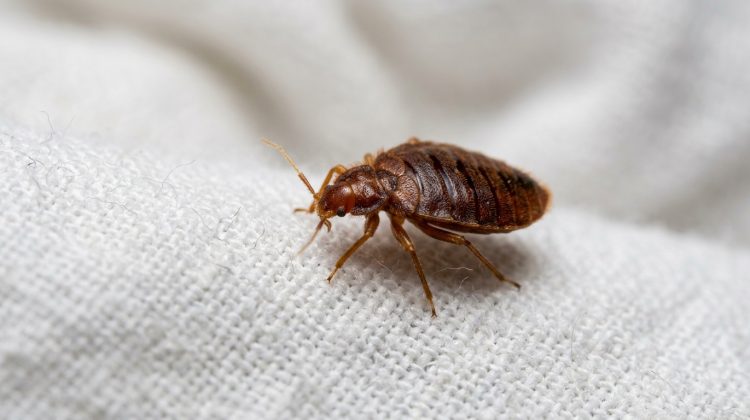
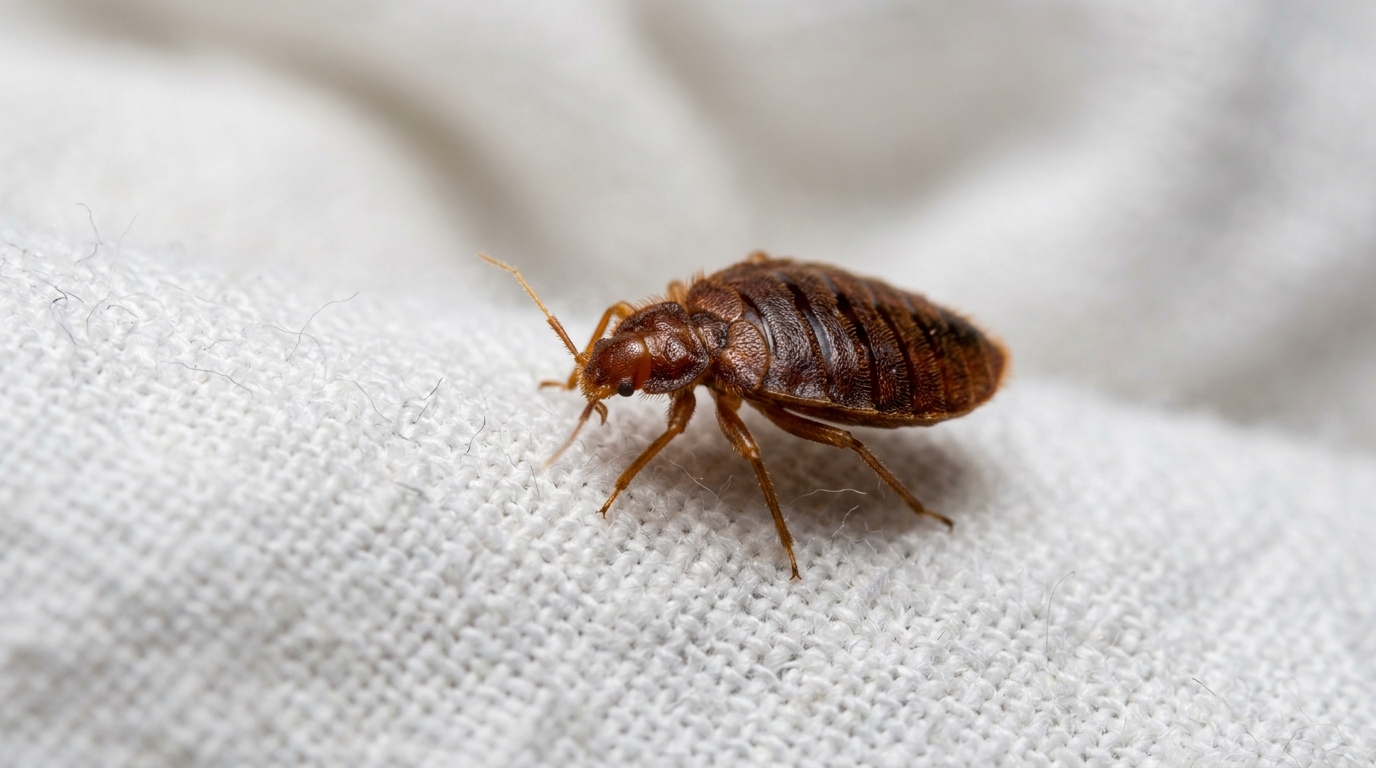
What do bed bugs look like? Adult bed bugs are reddish-brown, flat, oval insects about the size of an apple seed (5-7 millimeters long). They have six legs, short antennae, and no wings. Before feeding, their bodies appear thin and flat; after a blood meal, they swell and turn a darker reddish color. Accurate bed bug identification is critical because many homeowners confuse these pests with harmless insects, delaying effective treatment.
This guide walks you through every visual detail: adult bed bug appearance, nymphs, eggs, fecal spots, molted skins, and common look-alikes. By the end, you’ll know exactly how to identify bed bugs at every life stage.
Adult Bed Bug Appearance: Size, Shape, and Color
An adult bed bug measures 5 to 7 millimeters in length—roughly the size of an apple seed or a lentil. The body is oval and extremely flat when unfed, which allows the insect to hide in cracks as thin as a credit card edge. The coloration is typically mahogany or reddish-brown, though this can shift to a darker, shinier red immediately after feeding.
Key physical traits include:
- Six legs: All attached to the front third of the body
- Two antennae: Short, segmented, and positioned near the head
- No wings: Bed bugs cannot fly or jump; they crawl
- Segmented abdomen: Visible horizontal ridges, more pronounced when engorged
- Pronotum: A collar-like section behind the head, visible under magnification
The adult bed bug appearance changes dramatically after feeding. An engorged bed bug becomes elongated, swollen, and darker—almost burgundy. This blood meal is visible through the translucent exoskeleton as a dark mass in the abdomen. The EPA notes that unfed adults are flat and can survive months without feeding, making early detection difficult.
Nymphs and Eggs: The Immature Life Stages
Bed bug nymphs are juvenile insects that resemble adults but are smaller and lighter in color. A newly hatched nymph (first instar) measures roughly 1.5 millimeters—about the size of a pinhead—and appears nearly translucent or pale yellow. As nymphs progress through five molts, they grow darker and larger, eventually reaching adult size.
Before feeding, nymphs are almost invisible against light-colored fabrics. After a blood meal, the dark red blood inside their bodies becomes visible through the semi-transparent exoskeleton, creating a distinctive red or black dot appearance. This is one of the clearest signs of immature bed bug activity.
Bed bug eggs are even smaller: approximately 1 millimeter long, or about the size of two grains of salt. They are:
- Pearl-white or translucent
- Oval or elongated in shape
- Sticky when freshly laid, often found in clusters
- Difficult to remove from fabric or wood surfaces
Females lay 1 to 5 eggs per day, typically in crevices near host sleeping areas. Under magnification, eggs resemble tiny grains of rice with a slightly curved shape and a small eyespot visible near hatching.
| Life Stage | Size (mm) | Color | Key Identifying Feature |
|---|---|---|---|
| Egg | 1 | Pearl-white | Sticky, clustered, oval shape |
| First Instar Nymph | 1.5 | Translucent/pale yellow | Blood visible after feeding |
| Fifth Instar Nymph | 4.5 | Light brown | Nearly adult-sized, lighter color |
| Adult | 5–7 | Reddish-brown | Flat, oval, wingless, segmented abdomen |
Fecal Spots, Molted Skins, and Other Evidence
Even when you don’t see live bed bugs, you can identify an infestation through physical evidence left behind. These signs are often easier to spot than the insects themselves.
Fecal spots: Bed bugs digest blood and excrete waste as small, dark, rust-colored or black dots. These spots typically appear on mattress seams, box springs, bed frames, and nearby walls. Fresh fecal matter may smear when touched, while older spots are dry and resemble ground black pepper or felt-tip pen marks. Clusters of fecal spots often indicate harborage sites.
Molted skins (casings): As nymphs grow, they shed their exoskeletons five times before reaching adulthood. These shed skins are translucent, hollow, and retain the shape of the insect. They are typically found near hiding spots—behind headboards, along baseboards, and in furniture joints. The presence of multiple casings suggests an active, reproducing population.
Bloodstains: Small reddish or rust-colored smears on sheets, pillowcases, or pajamas may result from crushed bed bugs (if you roll over onto a recently fed insect) or from minor bleeding at bite sites. These stains are irregular and small, usually a few millimeters across.
Key takeaway: If you find dark fecal spots clustered along mattress seams, combined with translucent molted skins and a sweet, musty odor (in heavy infestations), you likely have a bed bug problem even if you haven’t seen a live insect yet. These evidence markers are critical for accurate bed bug identification.
Common Look-Alikes: Insects Mistaken for Bed Bugs
Many insects are misidentified as bed bugs, leading to unnecessary panic or incorrect treatment. Here’s how to tell the difference:
Carpet beetles: Round or oval, 2-5 millimeters, covered in tiny scales or hairs. They have wings and a mottled pattern of white, brown, or orange. Carpet beetle larvae are fuzzy and carrot-shaped. Unlike bed bugs, carpet beetles feed on natural fibers—not blood.
Bat bugs: Nearly identical to bed bugs in size and shape. The only reliable difference is the length of fringe hairs on the pronotum (the collar behind the head), which requires magnification. Bat bugs are typically found in homes with bat roosts in attics or chimneys.
Spider beetles: Round, 1.5-3.5 millimeters, with long legs and a humped back. They resemble small spiders and are often reddish-brown. Spider beetles infest stored food, not bedding.
Booklice: Tiny (1-2 millimeters), soft-bodied, pale or translucent insects found in humid areas near mold or paper. They are much smaller and more delicate than bed bugs and do not feed on blood.
Cockroach nymphs: Larger (5-10 millimeters even as juveniles), with longer legs and antennae. They are more active during the day in kitchens or bathrooms, whereas bed bugs are nocturnal and hide near sleeping areas.
If you’re in northern New Jersey and want a professional inspection, call 1-877-323-3284 for a free phone estimate. Anywhere else, look for a licensed local exterminator with same-day availability.
What to Do If You’ve Identified Bed Bugs
Once you’ve confirmed bed bug identification through visual inspection or evidence, taking immediate action is essential. Delaying treatment allows populations to grow exponentially—a single female can lay hundreds of eggs over her lifetime.
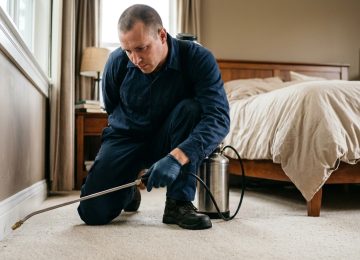
Do not attempt to treat the problem with over-the-counter foggers or sprays. These products rarely reach the cracks and crevices where bed bugs hide, and they can scatter the infestation to other rooms. Professional treatment involves targeted liquid applications, insect growth regulators (IGRs), and follow-up visits to eliminate all life stages.
Steps to take immediately:
- Reduce clutter to eliminate hiding spots
- Vacuum mattress seams, bed frames, and baseboards daily; dispose of vacuum bags in sealed plastic
- Wash and dry all bedding, clothing, and soft items on high heat (at least 30 minutes in the dryer)
- Encase mattresses and box springs in bed-bug-proof covers
- Avoid moving furniture or belongings to other rooms, which can spread the infestation
- Contact a licensed pest control professional for a thorough inspection and customized treatment plan
Professional treatment typically includes an initial targeted liquid application to harborage areas, an IGR to disrupt reproduction, and scheduled follow-up visits to address newly hatched nymphs. This proven protocol ensures long-term elimination without relying on a single method.
Frequently Asked Questions
Are bed bugs visible to the naked eye?
Yes, adult bed bugs are visible without magnification. At 5-7 millimeters, they are roughly the size of an apple seed. Nymphs and eggs are smaller and harder to see, especially on light-colored surfaces, but adults and older nymphs are detectable with careful inspection in good lighting.
What color are bed bugs after they feed?
After feeding, bed bugs turn a darker reddish or burgundy color. The blood meal is visible through the exoskeleton as a dark mass in the abdomen. Unfed bed bugs are mahogany or reddish-brown and appear flatter and lighter in color.
Can bed bugs be black?
Bed bugs are not naturally black. However, very dark fecal spots, dried bloodstains, or crushed bed bugs may appear black. Some people mistake engorged bed bugs (which can look very dark red) for black insects. True bed bugs range from pale yellow (nymphs) to reddish-brown (adults).
How do I know if a bug is a bed bug or a tick?
Ticks have eight legs (they are arachnids), while bed bugs have six legs (they are insects). Ticks are rounder and have a smaller head region. Bed bugs are flatter, oval, and do not attach to skin for extended periods. Ticks are typically found outdoors or on pets, whereas bed bugs infest indoor sleeping areas.
What do bed bug bites look like?
Bed bug bites often appear as small, red, itchy welts in a line or cluster, typically on exposed skin such as arms, shoulders, neck, or legs. However, reactions vary widely—some people show no visible bite marks at all. Because many conditions can cause similar skin reactions, consult your doctor or dermatologist for a proper diagnosis. Bites alone are not definitive proof of bed bugs; always look for physical evidence like live insects, fecal spots, or molted skins.
Do bed bugs have wings?
No, bed bugs do not have wings at any life stage. They cannot fly or jump. They move exclusively by crawling, which is why infestations spread through luggage, furniture, and clothing rather than by airborne movement.
Where are bed bugs most commonly found in a home?
Bed bugs prefer hiding spots within a few feet of where people sleep. Common locations include mattress seams and tags, box spring corners, bed frame joints, headboard crevices, nightstand drawers, baseboards behind beds, electrical outlets, picture frames, and upholstered furniture. In severe infestations, they spread to closets, carpets, and wall voids.
Now that you know exactly what bed bugs look like at every life stage—and how to distinguish them from common look-alikes—you can identify an infestation early and take informed action. For professional inspection and targeted treatment backed by 11 years of experience, contact Promax Bed Bug Experts at 1-877-323-3284. We serve northern New Jersey with same-day scheduling and a proven protocol that eliminates bed bugs at all life stages.
Related Reading
Think You Have Bed Bugs? Here’s Your Next Step.
Free phone estimates, same-day treatment across Bergen, Passaic, and Morris Counties. Talk to a licensed technician now.
Call 1-877-323-3284When you choose a local exterminator, look for these three things:
- State pesticide-applicator license (verify on your state’s Department of Environmental Protection site)
- Written treatment plan with follow-up visits included
- Same-day or next-day availability for active infestations