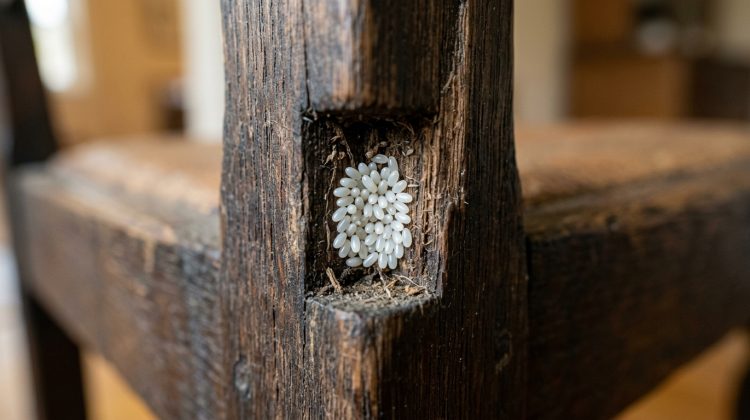
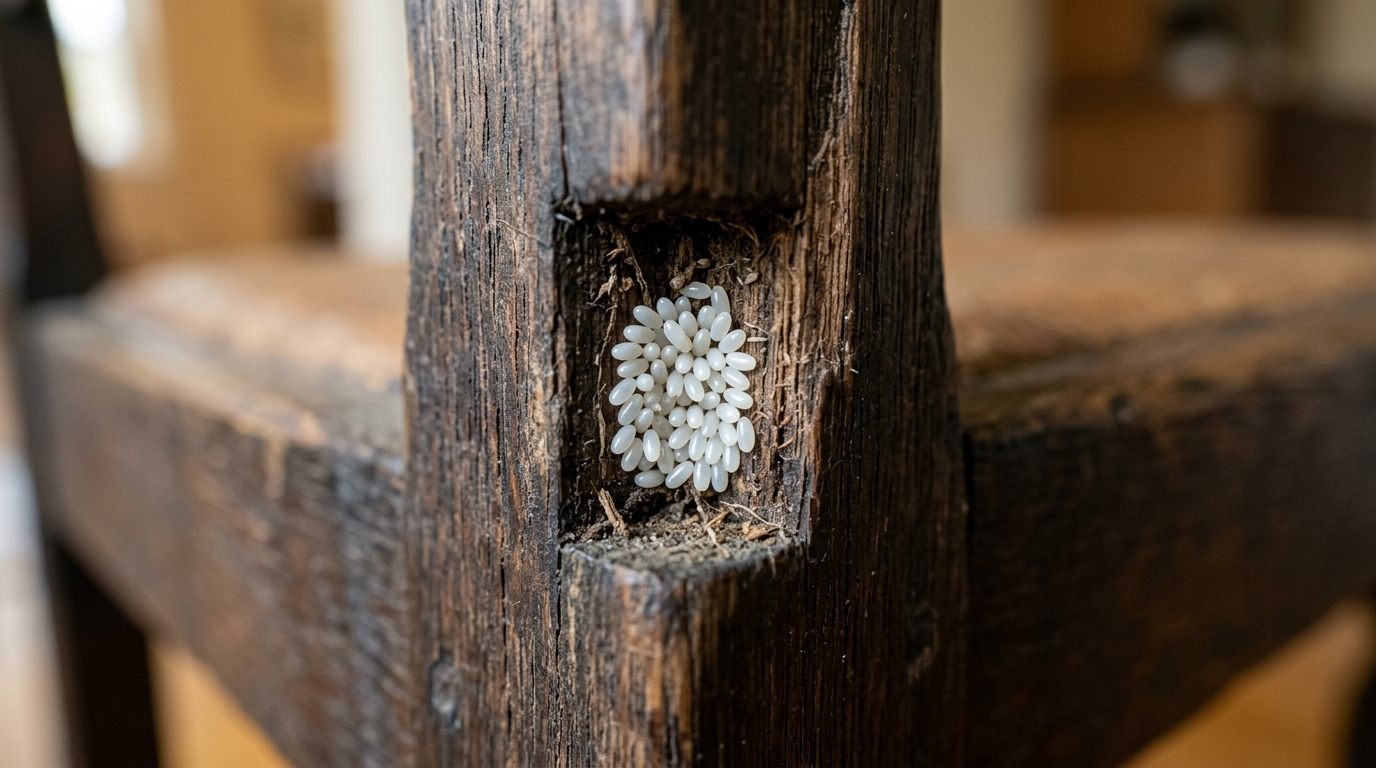
What Do Bed Bug Eggs Look Like? The Quick Answer
Bed bug eggs are approximately 1mm long—about the size of a pinhead or a grain of fine white rice cut in half. They appear as tiny, oval-shaped, pearl-white or translucent capsules with a slight glossy sheen. Fresh eggs look almost like miniature grains of dry rice, while older eggs may appear slightly opaque. When examined closely, you’ll notice a tiny eyespot on the egg if an embryo is developing inside. These eggs are always laid in clusters of 5 to 50, tucked into cracks, crevices, and seams where adult bed bugs hide during the day.
Female bed bugs cement their eggs to surfaces using a sticky secretion, so they don’t roll away or scatter easily. Under optimal conditions, bed bug eggs hatch in 6 to 10 days, releasing nymphs that immediately begin searching for a blood meal.
Detailed Visual Identification: Size, Shape, and Color
Understanding bed bug egg size and appearance is critical for early detection. Each egg measures roughly 1mm in length and 0.5mm in width—smaller than a sesame seed and similar in size to two grains of table salt placed end-to-end. The shape is distinctly elongated and oval, not perfectly round.
When freshly laid, bed bug eggs have a translucent, almost see-through quality with a creamy white or pale ivory hue. As the embryo develops over the next few days, a darker eyespot becomes faintly visible through the shell. Eggs about to hatch may show slight discoloration or a faint reddish tint from the developing nymph inside.
After hatching, the empty eggshells remain attached to the surface. These shells appear even more translucent—almost glass-like—and retain their oval shape. You might mistake them for live eggs at first glance, but empty shells are noticeably clearer and lack the slight opacity of viable eggs.
Bed bug eggs photos consistently show clusters rather than solitary eggs. Females deposit eggs in tight groups along mattress seams, inside screw holes, behind baseboards, and in any protected crack or void within 5 to 20 feet of a sleeping area. The University of Kentucky Entomology department’s fact sheet on bed bug biology notes that a single female can lay 1 to 5 eggs per day, accumulating up to 500 eggs over her lifetime under ideal feeding conditions.
Bed Bug Eggs vs. Look-Alikes: Comparison Table
| Item | Size | Shape | Color | Key Difference |
|---|---|---|---|---|
| Bed Bug Egg | 1mm long | Oval, elongated | Pearl-white, translucent | Stuck firmly to surface in clusters; glossy sheen |
| Dust or Lint | Variable | Irregular, fibrous | White to gray | Easily blown away; no defined shape |
| Sesame Seed Piece | 2-3mm | Flat, irregular | Off-white, tan | Larger, thicker, not translucent |
| Salt Grain | 0.5mm | Cubic or irregular | White, opaque | Much smaller; crystalline structure |
| Flea Egg | 0.5mm | Oval | White, smooth | Smaller, not sticky, falls off easily |
Where to Find Bed Bug Eggs on Mattress and Furniture
Bed bug eggs on mattress surfaces are most commonly found along the piping and seams where fabric folds meet. Run your fingernail along these seams and inspect for tiny white specks that don’t brush away. Check the underside of the mattress label, inside any tears or openings in the fabric, and around ventilation grommets.
Box springs offer dozens of hiding spots: examine the fabric corners, staple lines, and wooden frame joints. Pull back the dust cover on the underside and look for egg clusters along the wooden slats and inside the hollow frame channels.
Headboards—especially upholstered or wooden models—are prime egg-laying sites. Check behind the headboard where it meets the wall, inside screw holes, and along any decorative grooves. Bed frames, particularly those with hollow metal tubing or recessed bolt holes, provide protected harborage for eggs.
Beyond the bed, inspect:
- Baseboards and carpet edges where the wall meets the floor
- Electrical outlet covers and switch plates (remove carefully to check inside)
- Picture frames, wall hangings, and clocks mounted near sleeping areas
- Nightstand drawers, especially the underside and rear corners
- Upholstered furniture seams, zippers, and underneath cushions
- Cracks in wood furniture, especially joints and screw holes
- Behind peeling wallpaper or loose trim
Bed bugs prefer dark, undisturbed locations within 5 to 8 feet of where people sleep, so concentrate your search in the bedroom first. If you’re in northern New Jersey and want a professional inspection, call 1-877-323-3284 for a free phone estimate. Anywhere else, look for a licensed local exterminator with same-day availability.
How Many Eggs Do Bed Bugs Lay? Lifecycle and Reproduction
A single fertilized female bed bug typically lays 1 to 5 eggs per day after taking a blood meal. Over her lifetime—which can span 6 to 12 months under favorable conditions—she may produce 200 to 500 eggs. This rapid reproductive rate explains why small infestations can explode into large populations within weeks if left untreated.
The bed bug lifecycle proceeds in stages: egg, five nymphal instars, and adult. After an egg hatches in 6 to 10 days (temperature-dependent), the newly emerged nymph is about 1.5mm long and nearly colorless. It must feed on blood within 24 to 48 hours to molt into the next stage. Each nymphal stage requires at least one blood meal before molting, and the entire progression from egg to adult takes roughly 5 to 8 weeks at room temperature.
Key takeaway: Bed bug eggs are the most resilient life stage. Many targeted treatments are designed to eliminate nymphs and adults on contact, but follow-up visits are necessary to address newly hatched nymphs from any eggs that survived the initial application. That’s why professional protocols include residual liquid applications and insect growth regulators (IGRs) that disrupt development, combined with scheduled follow-ups 10 to 14 days later to catch the next generation.
Common Mistakes When Identifying Bed Bug Eggs
Many people confuse bed bug eggs with harmless debris. Here are the most frequent misidentifications:
Assuming all white specks are eggs: Dust, lint, peeling paint chips, and plaster crumbs can all resemble eggs at a glance. True bed bug eggs are uniformly oval, have a slight translucence, and remain firmly attached to the surface. Try gently scraping with a fingernail—eggs resist removal due to the adhesive coating, while dust and lint brush away easily.
Overlooking empty shells: Hatched eggshells stay glued in place and can mimic live eggs. Empty shells are more transparent and lack the subtle opacity of viable eggs. If you see dozens of translucent ovals but no signs of nymphs or adults nearby, you may be looking at old shells from a previous infestation or one that has recently hatched.
Expecting eggs to be large or visible without magnification: At 1mm, bed bug eggs are barely visible to the naked eye in good lighting. A magnifying glass or smartphone macro lens dramatically improves detection. Without magnification, eggs often look like faint white dashes or dots.
Searching only the mattress top: Most eggs are laid in hidden, protected areas—not on exposed surfaces where they’d be easily disturbed. Always inspect seams, crevices, and undersides.
Ignoring the cluster pattern: Bed bugs rarely lay a single egg in isolation. If you find one suspected egg, search the immediate area for more. Clusters of 10 to 50 eggs are common in established infestations.
What to Do Next: Inspection and Professional Treatment
If you’ve confirmed or strongly suspect bed bug eggs in your home, immediate action is essential to prevent the infestation from expanding. Begin by isolating infested items—seal them in plastic bags until treatment. Avoid moving furniture or belongings from room to room, as this spreads the infestation.
Document your findings with photos, noting the locations and approximate quantities of eggs and any live bugs or shed skins. This information helps exterminators assess the scope and plan treatment.
Professional treatment is the most reliable solution. Effective protocols combine targeted liquid applications that reach cracks and voids where eggs are laid, insect growth regulators (IGRs) that prevent nymphs from maturing, and scheduled follow-up visits. The first visit addresses active adults and nymphs; the follow-up—scheduled 10 to 14 days later—targets newly hatched nymphs before they can reproduce. A third visit may be recommended for severe infestations.
Do not rely on over-the-counter sprays alone. Consumer products rarely reach the hidden crevices where eggs are cemented, and they don’t provide the residual protection needed to kill newly hatched nymphs over time. Licensed exterminators have access to professional-grade products and application techniques that maximize coverage and effectiveness.
For ongoing prevention, reduce clutter that provides additional hiding spots, vacuum frequently along baseboards and seams, and inspect secondhand furniture carefully before bringing it indoors.
Frequently Asked Questions
Can you see bed bug eggs with the naked eye?
Yes, but it’s challenging. Bed bug eggs are about 1mm long—roughly the size of a pinhead—so they’re at the threshold of visibility. In good lighting and against a dark background, you can spot them as tiny white ovals, especially when clustered. A magnifying glass or smartphone macro lens makes detection much easier.
What color are bed bug eggs when they’re about to hatch?
Fresh bed bug eggs are pearl-white or translucent. As they mature over 6 to 10 days, a faint dark eyespot may become visible inside, and the egg can take on a slightly more opaque or ivory appearance. Just before hatching, you might notice a faint reddish tint from the developing nymph inside.
How long does it take for bed bug eggs to hatch?
Bed bug eggs typically hatch in 6 to 10 days at room temperature (70-80°F). Cooler temperatures can extend this period, while warmer conditions may accelerate hatching. After emerging, nymphs must feed within 24 to 48 hours to survive and molt into the next developmental stage.
Do bed bug eggs stick to fabric or fall off easily?
Bed bug eggs are firmly cemented to surfaces using a sticky secretion produced by the female. They do not fall off easily, even when fabric is moved or shaken. This adhesive quality helps you distinguish eggs from dust, lint, or salt grains, which brush away readily.
Where are bed bug eggs most commonly found?
Bed bug eggs are most often found along mattress seams and piping, inside box spring corners, in headboard crevices, behind baseboards, inside electrical outlets, and in furniture joints near sleeping areas. Females prefer dark, undisturbed cracks and crevices within 5 to 20 feet of where people sleep.
Can bed bug eggs survive without a host nearby?
Yes. Bed bug eggs do not require a blood meal or host proximity to develop and hatch. Once laid, the embryo develops independently over 6 to 10 days. However, newly hatched nymphs must feed within 24 to 48 hours to survive, so proximity to a host becomes critical immediately after hatching.
What’s the difference between a bed bug egg and a flea egg?
Bed bug eggs are about 1mm long, oval, pearl-white, and firmly cemented to surfaces in clusters. Flea eggs are smaller (roughly 0.5mm), also oval and white, but they are not sticky—they fall off the host animal and scatter. Flea eggs are typically found in pet bedding, carpets, and upholstery rather than glued to seams and cracks.
Early identification of bed bug eggs gives you a critical advantage in controlling an infestation before it grows. If you’ve found eggs or suspect their presence, act quickly—contact a licensed pest control professional to assess the situation and implement a comprehensive treatment plan. The sooner you address bed bug eggs, the easier and faster your home will return to normal.
Related Reading
Think You Have Bed Bugs? Here’s Your Next Step.
Free phone estimates, same-day treatment across Bergen, Passaic, and Morris Counties. Talk to a licensed technician now.
Call 1-877-323-3284When you choose a local exterminator, look for these three things:
- State pesticide-applicator license (verify on your state’s Department of Environmental Protection site)
- Written treatment plan with follow-up visits included
- Same-day or next-day availability for active infestations